



Not all cyberattacks announce themselves with ransomware pop-ups or system crashes. Some of the most dangerous attacks happen silently, right in front of you—without your knowledge. One of the most feared and proven techniques used by cybercriminals is the Man in the Middle Attack.
In 2026, as public Wi-Fi, remote work, cloud apps, and mobile banking dominate everyday life, MITM attacks have become more effective, harder to detect, and incredibly profitable for attackers.
This article breaks down 7 alarming facts about MITM attacks, how they work, real-world use cases, and how you can defend yourself.
Table of Contents
Key Takeaways
- Prevalence: MITM attacks are alarmingly common, accounting for a significant percentage of successful cyberattacks globally.
- Versatility: Attackers exploit various channels, including Wi-Fi, email, and even physical interactions, making detection challenging.
- Data Vulnerability: Sensitive data, from login credentials to financial information, is highly susceptible to interception and manipulation.
- Remote Work Risk: The rise of remote work has amplified MITM vulnerabilities, especially on unsecured home networks.
- Multi-layered Defense: Effective protection requires a combination of robust encryption, authentication, and continuous monitoring.
MITM Attacks Account for Nearly One-Fifth of All Successful Cyberattacks Globally
It’s a chilling statistic: Man in the Middle (MITM) attacks are not niche occurrences but a fundamental component of the global cyber threat landscape. Recent data indicates that MITM attacks account for a staggering 19% of all successful cyberattacks across organizations globally [1]. This isn’t just about isolated incidents; it speaks to the pervasive nature of these cyberattack techniques.
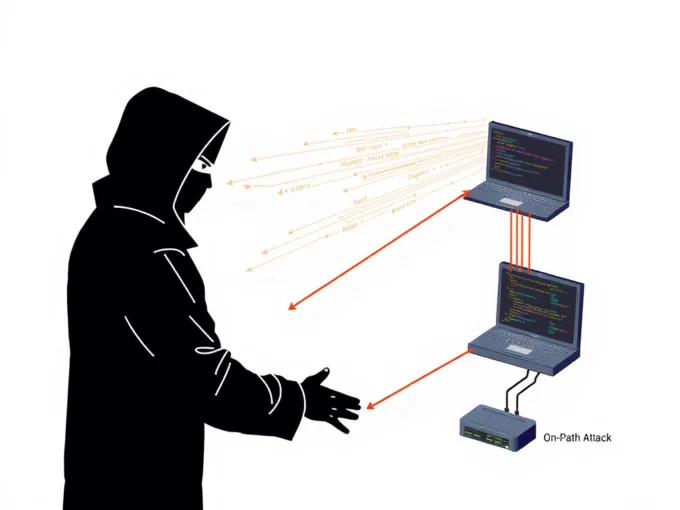
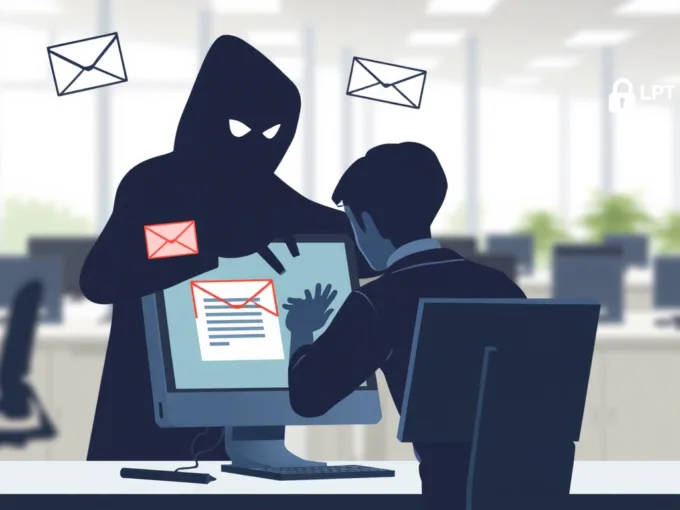
Think about that for a moment: almost one in five successful breaches or compromises you hear about could very well have originated with a MITM attack. This statistic underscores the fact that the Man in the middle cyberattack is a proven, effective method for threat actors to gain unauthorized access, intercept sensitive data, and disrupt operations. The attacker positions themselves between two communicating parties, allowing them to eavesdrop, capture credentials, and even alter messages without either party realizing they’re compromised.
This high success rate isn’t accidental. MITM attacks often blend technical sophistication with social engineering tactics, making them incredibly difficult to detect in their initial stages. Whether it’s through a seemingly legitimate public Wi-Fi network, a compromised router, or an email spoofing scheme, the goal is always the same: to become the invisible intermediary in your digital conversations. Understanding this prevalence is the first step toward recognizing the true danger these network interception attacks pose. For more insights into common cyber threats, you can explore articles like Cyber Threats 2024: Key Incidents and What to Expect in 2025.
MITM Based Email Compromise Surged by 35% Since 2021, Indicating Accelerating Threat Trends
Email remains a primary vector for communication in both personal and professional spheres, making it an irresistible target for cybercriminals employing Man in the Middle (MITM) techniques. We’ve seen a significant acceleration in this specific threat: MITM-based compromised emails have surged by an alarming 35% since 2021 [2]. This upward trend highlights a critical vulnerability and an evolving threat landscape that demands immediate attention.
This surge in email compromise, often initiated through MITM techniques, is directly linked to business email compromise (BEC) incidents. BEC, in fact, accounted for 6% of organizational incidents [3], often beginning with a successful MITM attack that allows the attacker to hijack an email session or impersonate a trusted sender. By sitting in the middle of an email exchange, an attacker can:
- Intercept sensitive information: Reading confidential discussions, financial details, or intellectual property.
- Alter communications: Changing bank account numbers in invoices or redirecting payments.
- Impersonate individuals: Sending fraudulent emails that appear to come from a legitimate sender, tricking recipients into revealing data or taking harmful actions.
Many targeted cyberattacks originate with compromised email vectors, where MITM attacks serve as initial access points [4]. The attacker might, for example, exploit vulnerabilities in email protocols or use phishing to steal credentials, then use those credentials to establish a MITM position within an email server or client. This kind of data interception attack can be devastating for businesses, leading to significant financial losses and reputational damage. Strong email security protocols, including advanced authentication and encryption, are no longer optional but absolutely essential to counter these accelerating threat trends. We often emphasize how to send secure email in Outlook as a crucial step against such threats.
On iOS Devices, MITM Attacks Represent 39.8% of Network Based Security Threats
Our mobile devices are extensions of ourselves, holding a vast amount of personal and professional data. Unfortunately, they are also prime targets for Man in the Middle (MITM) attacks. Specifically, on iOS mobile devices, Man in the Middle (MITM) attacks represent an astonishing 39.8% of network-based security threats [5]. This fact underscores the critical vulnerability of mobile networks to these sophisticated cyberattack techniques.
Mobile device networks present significant MITM attack surfaces, with network-based threats being among the most prevalent attack categories [6]. How does this happen?
- Public Wi-Fi Hacking: Connecting to unsecured public Wi-Fi networks in cafes, airports, or hotels is a golden opportunity for a MITM attacker. They can set up rogue Wi-Fi hotspots that appear legitimate, luring users to connect. Once connected, all data passing through that network can be intercepted.
- Malicious Apps: Some malicious apps can create a local proxy or VPN configuration on a device, effectively performing a MITM attack locally by rerouting traffic through the attacker’s server.
- SSL Stripping: Attackers can downgrade secure HTTPS connections to insecure HTTP connections, making encrypted traffic visible and interceptable.
- DNS Spoofing: Redirecting mobile devices to malicious websites even when the user types the correct URL.
The sheer volume of network-based threats on mobile devices, nearly 40% of which are MITM attacks, should be a stark warning. Users must exercise extreme caution when using public Wi-Fi, ensure their device’s operating system and apps are updated, and consider using a reliable VPN (Virtual Private Network) for all internet activity, especially on untrusted networks. Protecting your mobile device is just as important as securing your desktop, given how much sensitive information we access on the go.
MITM Attacks Exploit Multiple Delivery Channels, Including In-Person Interactions and Phone Calls
When we talk about Man in the Middle (MITM) attacks, most people immediately think of digital channels like Wi-Fi or email. However, the alarming truth is that MITM attacks exploit multiple delivery channels, extending beyond the purely digital realm to include in-person interactions, phone calls, and, of course, online communications [7]. This versatility makes them incredibly difficult to predict and defend against, encompassing a wider range of cyberattack techniques.
This broader scope includes:
- Physical Interception: In certain high-security contexts, an attacker might physically tamper with network cables or devices to insert themselves into a communication path. While less common for the average user, it highlights the comprehensive nature of the MITM threat.
- Voice Interception (Vishing): An attacker might intercept or redirect phone calls, posing as one of the parties to extract information or issue instructions. This can be particularly effective in social engineering schemes where the attacker already has some context about the call’s purpose.
- SMS Interception: Attackers can intercept SMS messages, which can be critical for two-factor authentication (2FA) codes, allowing them to bypass security measures.
- DNS Spoofing: This is a classic online MITM technique where the attacker corrupts a DNS server’s cache, redirecting users to malicious websites even if they type the correct URL.
- ARP Spoofing: On local networks, Address Resolution Protocol (ARP) spoofing allows an attacker to link their MAC address to the IP address of a legitimate network device, effectively intercepting traffic.
- Email Spoofing/Hijacking: As discussed earlier, this allows attackers to read, alter, or send emails as if they were a legitimate party.
The fact that MITM attacks can leverage such a diverse array of channels means that a holistic security strategy is paramount. It’s not enough to secure just your Wi-Fi; you must also be vigilant about your phone calls, SMS messages, and even the physical security of your network infrastructure. This multi-faceted threat requires a multi-layered defense.
Remote Work Expansion in 2025 Has Created New Vulnerability Vectors, Increasingly Targeting Unsecured Home Networks
The global shift towards remote work, significantly accelerated since 2020 and continuing its expansion into 2025, has reshaped the cybersecurity landscape. While offering flexibility, this shift has simultaneously created new vulnerability vectors, with Man in the Middle (MITM) attacks increasingly targeting unsecured home networks. Organizations with higher percentages of remote workers face elevated MITM attack risks due to reduced network perimeter control [8].
In an office environment, corporate networks typically have robust firewalls, intrusion detection systems, and dedicated IT staff monitoring traffic. Home networks, however, often lack these sophisticated defenses.
- Default Router Passwords: Many home users never change the default passwords on their routers, making them easy targets for attackers.
- Outdated Firmware: Home routers are frequently left with outdated firmware, containing known vulnerabilities that can be exploited for a MITM attack.
- Lack of Encryption: Some home networks might still use older, weaker Wi-Fi encryption standards, or even none at all, making them easy to compromise.
- Shared Devices: Family members using the same home network for various activities can unknowingly introduce malware or open backdoors.
Attackers can leverage these weaknesses to execute MITM attacks, turning a home office into a data interception point. They might:
- Spoof a local network device: Intercepting traffic between a remote worker’s laptop and the internet.
- Target video conferencing applications: Exploiting vulnerabilities to listen in on sensitive business calls.
- Phish credentials over a compromised connection: Gaining access to corporate systems through a remote worker’s login.
This expanded attack surface demands greater emphasis on personal cyber hygiene for remote workers and robust security policies from organizations. Implementing strong cyber hygiene in 2025 is more crucial than ever. This includes mandatory VPN usage, secure home network configurations, and regular security awareness training.
Standard MITM Attack Methodologies Incorporate Phishing and Spoofing Techniques to Intercept Communications
The effectiveness of a Man in the Middle (MITM) attack often hinges on deception. Standard MITM attack methodologies frequently incorporate well-known phishing and spoofing techniques to effectively intercept communications [9]. These tactics are not merely complementary; they are often integral to establishing the MITM position and ensuring the attack’s success as a sophisticated data interception attack.
Let’s break down how these cyberattack techniques work in tandem:
Phishing as an Entry Point:
- Credential Theft: An attacker might send a convincing phishing email (e.g., impersonating a bank or IT department) to trick a victim into revealing their login credentials. Once obtained, these credentials can be used to log into legitimate services and then set up a MITM proxy or session hijacking.
- Malware Delivery: Phishing emails can also deliver malware that, once installed, can establish a backdoor on the victim’s machine, enabling the attacker to reroute traffic or create a rogue Wi-Fi hotspot.
- Session Hijacking: After a user logs into a legitimate service, a MITM attacker can intercept the session cookie, allowing them to take over the active session without needing the password.
Spoofing for Impersonation:
- IP Spoofing: Attackers can forge the IP address of a trusted entity to gain access to a network or deceive recipients.
- ARP Spoofing: As mentioned, this involves sending fake ARP messages over a local area network, linking an attacker’s MAC address with the IP address of a legitimate network device, thereby intercepting traffic.
- DNS Spoofing: Redirects users from legitimate websites to malicious ones by corrupting DNS entries.
- Email Spoofing: Altering the sender’s address in an email to appear as if it came from a legitimate source, often used in BEC scams.
The combination of phishing and spoofing allows MITM attackers to bypass initial security checks and position themselves invisibly within a communication stream. This is why user vigilance and robust technical controls against both phishing and spoofing are critical. For strategies to strengthen digital security against such combined threats, consider exploring resources like 10 Strategies to Strengthen Digital Security.
MITM Attack Prevention Requires Multi-Layered Security Approaches Across Network Infrastructure and User Endpoints
Given the versatility and increasing sophistication of Man in the Middle (MITM) attacks, a single-point solution is simply inadequate. Effective MITM attack prevention requires multi-layered security approaches across network infrastructure and user endpoints [10]. This holistic strategy is vital for comprehensive protection against these persistent data interception attacks.
Here are key components of a robust, multi-layered defense:
- Strong Encryption:
- SSL/TLS: Always ensure websites use HTTPS (indicated by a padlock icon) for encrypted communication. Avoid sites that still use HTTP, especially when entering sensitive information.
- VPNs: A Virtual Private Network encrypts your internet traffic, creating a secure tunnel between your device and the VPN server. This is especially crucial when using public Wi-Fi, preventing public Wi-Fi hacking.
- Robust Authentication:
- Multi-Factor Authentication (MFA): Implement MFA for all accounts. Even if an attacker intercepts your password through a MITM attack, they will still need a second factor (like a code from your phone) to gain access.
- Strong Passwords: Use unique, complex passwords for all accounts.
- Network Security:
- Firewalls: Deploy and properly configure firewalls to monitor and control incoming and outgoing network traffic. Understanding best business firewalls in 2025 is essential.
- Network Segmentation: Divide your network into smaller, isolated segments. This limits an attacker’s lateral movement even if one segment is compromised.
- Intrusion Detection/Prevention Systems (IDPS): These systems can detect and block suspicious activity indicative of a MITM attack.
- Endpoint Security:
- Antivirus/Anti-malware: Keep your antivirus software updated to detect and remove malicious software that could facilitate MITM attacks.
- Software Updates: Regularly update operating systems, browsers, and all applications. Patches often fix vulnerabilities that MITM attackers exploit.
- Secure DNS: Configure your devices to use secure DNS servers (e.g., DNS over HTTPS or DNS over TLS) to prevent DNS spoofing.
- User Education and Awareness:
- Phishing Training: Educate employees and users about phishing scams and how to identify suspicious emails or websites.
- Public Wi-Fi Warnings: Remind users about the dangers of unsecured public Wi-Fi and encourage VPN use.
- Learn more about how to train employees on cybersecurity awareness.
By adopting a comprehensive approach that integrates these protective measures, organizations and individuals can significantly reduce their exposure to Man in the Middle (MITM) attacks and fortify their defenses against evolving cyberattack techniques.
Staying Ahead: The Ongoing Battle Against MITM Cyberattack Techniques
Attackers employing MITM techniques are constantly seeking new vulnerabilities and refining their methods, often blending technical exploits with social engineering. Whether it’s through public Wi-Fi hacking, session hijacking, or exploiting weaknesses in communication protocols, their goal is always to secretly position themselves to listen, alter, and steal sensitive information.
For individuals, vigilance is paramount. Be cautious of public Wi-Fi, use VPNs, keep your software updated, and always enable multi-factor authentication. For organizations, the commitment to robust, multi-layered security strategies is non-negotiable. This includes strong network security, comprehensive endpoint protection, and continuous employee training on the latest cyberattack techniques. Regularly assess your security posture and stay informed about emerging threats through reputable sources like Cybertech Journals.
The battle against MITM attacks is ongoing, but with awareness, education, and the implementation of strong security practices, we can significantly reduce our vulnerability and protect our digital lives.
Conclusion: The alarming facts
Man in the Middle (MITM) attacks are far from a hypothetical threat; they are a pervasive and highly successful cyberattack technique that has only grown in scope and sophistication, especially heading into 2025. We’ve seen that these network interception attacks account for a significant portion of successful breaches, with MITM-based email compromises surging and mobile devices being particularly vulnerable. The expansion of remote work has broadened the attack surface, making unsecured home networks ripe targets. Furthermore, the reliance on phishing and spoofing solidifies MITM as a stealthy and deceptive threat.
The alarming facts presented underscore a crucial message: neither individuals nor organizations can afford to be complacent. Data interception attacks like MITM can lead to severe consequences, from financial fraud and intellectual property theft to privacy breaches and reputational damage.
Actionable Next Steps:
- Implement Strong Encryption: Always use VPNs on public networks and ensure websites use HTTPS.
- Embrace Multi-Factor Authentication (MFA): Make MFA mandatory for all sensitive accounts to prevent session hijacking.
- Secure Your Networks: For individuals, update router firmware and use strong Wi-Fi passwords. For businesses, implement firewalls, intrusion detection systems, and network segmentation.
- Educate and Train: Stay informed about phishing and social engineering tactics. Organizations must conduct regular cybersecurity awareness training for employees.
- Regularly Update Software: Keep operating systems, browsers, and applications patched to address known vulnerabilities.
- Monitor for Anomalies: Be alert to unusual network behavior, suspicious emails, or unexpected changes in online accounts.
By proactively adopting these multi-layered security approaches, we can collectively strengthen our defenses against the persistent and evolving threat of Man in the Middle (MITM) attacks, safeguarding our data and maintaining trust in our digital communications in 2025 and beyond.
FAQs (Featured Snippet Style)
What is a Man in the Middle attack?
A MITM attack occurs when a hacker secretly intercepts or alters data between two parties communicating, without either party knowing.
How can I prevent MITM attacks?
Use a VPN, enable multi-factor authentication, browse only HTTPS sites, and keep all devices and apps patched and up to date.
Are public Wi-Fi networks safe?
Not without protection. Use a VPN when on public networks to avoid MITM attacks and data interception.
Which tools do hackers use for MITM?
Common tools include Ettercap, Bettercap, Wireshark, Evilginx2, and Cain & Abel.










Leave a comment