



Imagine meeting someone online, falling for their charm, building a deep connection, and then being slowly, methodically stripped of your life savings. This isn’t a plot from a thriller; it’s the chilling reality of the “Pig Butchering Scam,” also known as “Sha Zhu Pan” – a sophisticated and devastating form of online fraud that has ruined countless lives globally. This article will expose the disturbing truths behind this scam, detailing how it works, why it’s so effective, and critically, how you can protect yourself and your loved ones in 2025. As an expert SEO content strategist and senior editor, I’m here to unpack this complex threat and provide you with the essential knowledge needed to navigate the treacherous waters of online interactions.
Table of Contents
Key Takeaways
- Sophisticated Social Engineering: The Pig Butchering Scam is a long-term fraud that relies heavily on social engineering, building emotional connections before introducing investment opportunities.
- Focus on Cryptocurrency: While other investments may be used, cryptocurrency is the primary vehicle for these scams due to its perceived anonymity and complexity.
- International Organized Crime: These operations are often run by organized criminal syndicates, frequently involving victims of human trafficking forced into perpetrating the scams from overseas “scam compounds.”
- Devastating Financial and Emotional Toll: Victims suffer profound financial losses, often their entire life savings, coupled with severe emotional trauma and betrayal.
- Prevention is Key: Understanding the red flags, verifying identities, being skeptical of unsolicited investment advice, and securing your digital footprint are crucial for protection.
Understanding the Pig Butchering Scam: A Deep Dive into Deception
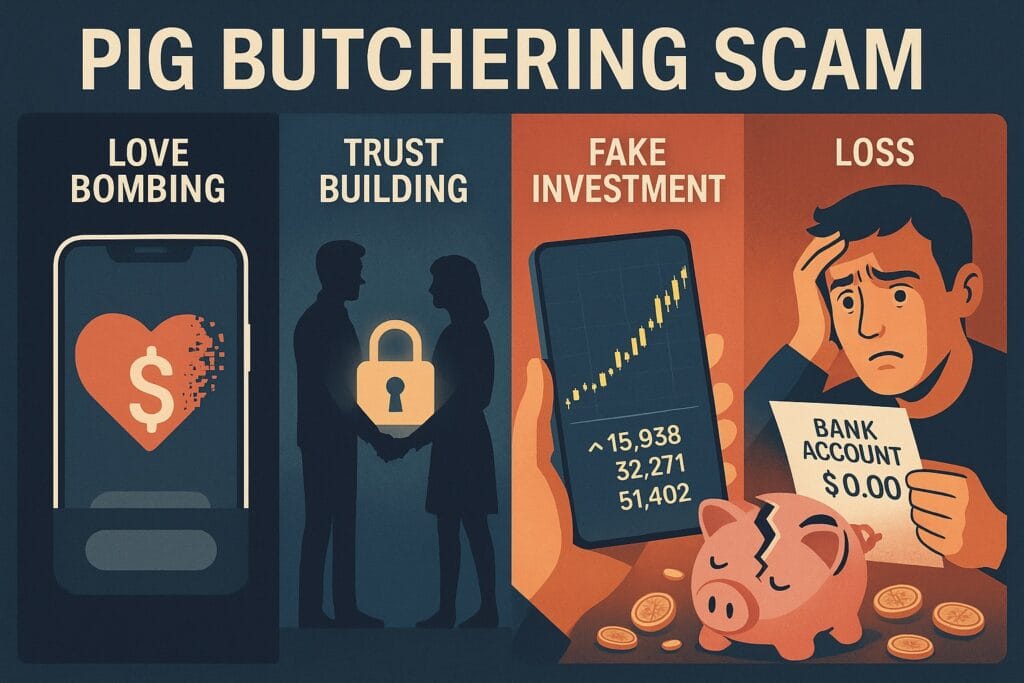
The “Pig Butchering Scam” gets its name from the chilling analogy of fattening a pig before slaughter. Scammers meticulously “fatten” their victims (the “pigs”) with affection, trust, and the illusion of a lucrative investment opportunity, only to “slaughter” their finances by convincing them to pour money into fake investment platforms. This is not a quick phishing attempt; it’s a meticulously planned, long-form fraud that can span weeks, months, or even over a year, making it incredibly difficult for victims to identify until it’s too late.
The Stages of the Pig Butchering Scam
The scam unfolds in several distinct, yet often overlapping, stages:
- Initial Contact (The “Hunt”):
- How it starts: Scammers initiate contact on dating apps (Tinder, Bumble, Hinge), social media platforms (Facebook, Instagram, LinkedIn), or even through random text messages, often claiming to have gotten the wrong number.
- Profile Fabrication: They use stolen photos and elaborate backstories to create highly appealing, trustworthy, and often successful-looking profiles. These profiles are designed to resonate with potential victims’ desires for connection and financial stability.
- Targeting: Victims are often chosen based on perceived vulnerability – individuals seeking love, lonely older adults, or professionals looking for legitimate investment advice.
- Love Bombing and Relationship Building (The “Fattening”):
- Emotional Manipulation: This is the critical “love bombing” phase. The scammer dedicates intense time and effort to build a deep, personal relationship. They are exceptionally attentive, charming, and quickly express strong feelings (love, devotion, shared future plans). They may share fake personal details, stories, and even “future dreams” to make the connection feel genuine.
- Trust and Confidence: Through constant communication – texts, calls, sometimes even video calls (though often pre-recorded or using deepfakes) – they foster immense trust. They position themselves as caring, successful, and genuinely interested in the victim’s well-being and future.
- Introducing the “Investment Opportunity” (The “Setup”):
- Subtle Introduction: Once a strong emotional bond is established, the scammer subtly introduces their “secret” to wealth: a highly profitable, low-risk investment platform, usually involving cryptocurrency. They often claim to have an “uncle” or “expert” connection who provides insider tips.
- Gauging Interest: They gauge the victim’s interest in financial growth and plant seeds of desire for a better future together.
- No Pressure (Initially): At this stage, they rarely pressure the victim. Instead, they frame it as an opportunity they want to share with someone they care about.
- The Initial Investment (The “First Taste”):
- Small Wins: The scammer guides the victim through making a small initial investment on a fraudulent platform (which looks legitimate, often with a slick interface). Crucially, the victim sees immediate, impressive returns. This initial success is crucial; it builds confidence and greed.
- Fake Withdrawals: Victims are usually allowed to make one or two small withdrawals, further solidifying the belief that the platform is real and profitable. This is a psychological trick to hook them deeper.
- Encouraging Larger Investments (The “Slaughter”):
- Pressure and Urgency: Now, the pressure mounts. The scammer encourages larger and larger investments, citing “once-in-a-lifetime opportunities,” “market fluctuations,” or “exclusive access.” They might feign their own large investments to show commitment.
- Emotional Blackmail: They leverage the emotional bond, making the victim feel that investing more will secure their shared future. Refusal might be met with disappointment or subtle guilt trips.
- Technical Support: Fake “customer support” or “analysts” on the platform may also reach out, offering guidance and further validating the scam.
- The Blockage and Disappearance (The “Butchering”):
- Withdrawal Issues: When the victim attempts to withdraw a significant amount of money, they are met with excuses: “taxes,” “fees,” “technical glitches,” or “account frozen for suspicious activity.” They are often told they need to pay more money to release their funds.
- Vanishing Act: After exhausting the victim’s funds or when the victim finally realizes it’s a scam, the scammer disappears, blocking all communication. The fake investment platform vanishes, and all invested money is gone.
This elaborate scheme preys on human emotions and aspirations, making it incredibly effective and devastating.
The Psychological Tactics Behind the Pig Butchering Scam
The success of the Pig Butchering Scam lies in its masterful application of social engineering and psychological manipulation. It exploits fundamental human desires and vulnerabilities.
Love Bombing: The Foundation of Deceit
The “love bombing” phase is where the scam truly takes root. Scammers shower victims with excessive attention, affection, and declarations of love early in the relationship. This intense emotional connection creates a sense of obligation and deep trust, making the victim less likely to question future requests. It’s a calculated strategy to disarm critical thinking and build dependency. They learn about the victim’s dreams, fears, and financial situation, then weave these details into their narrative to make the connection feel incredibly personal and fated.
Authority and Expertise
Scammers often present themselves as financially successful individuals or claim to have inside connections to “financial gurus” or “uncles” with special market insights. This establishes a false sense of authority and expertise, making their investment advice seem credible and irresistible. They exploit the common desire for financial security and the belief that there are “secret” ways to get rich quickly.
Social Proof (Fake)
The fake investment platforms are designed to look professional, often featuring testimonials, charts showing constant growth, and even “live” trading data. This creates a false sense of social proof, making the platform appear legitimate and used by many successful investors. The initial small, successful withdrawals further reinforce this illusion, tricking the victim into believing in the platform’s validity.
Scarcity and Urgency
To compel larger investments, scammers often introduce elements of scarcity (“this opportunity won’t last”) or urgency (“the market is about to spike, invest now!”). This pressure tactic bypasses rational decision-making, forcing victims to act quickly out of fear of missing out on significant gains.
Isolation and Control
As the scam progresses, the scammer might subtly encourage the victim to keep the investment a secret, framing it as a “personal opportunity” or a “surprise” for their future together. This isolates the victim from friends and family who might otherwise notice the red flags and intervene. This isolation reinforces the scammer’s control over the victim’s perception and decisions.
For more on recognizing and countering sophisticated digital threats, explore articles on cyber threats 2024 and what to expect in 2025.
Common Red Flags of a Pig Butchering Scam
Identifying a Pig Butchering Scam requires vigilance and a healthy dose of skepticism. Here are key red flags to watch out for:
- Rapid Escalation of Affection: If someone you’ve only known for a short time online starts professing deep love, talking about marriage, or planning a future together almost immediately, be extremely wary. Genuine relationships take time to develop.
- Unsolicited Investment Advice: Your new online acquaintance quickly steers conversations towards their incredible success with a specific online investment platform, usually cryptocurrency. This often happens without you asking for financial advice.
- Insistence on Moving to Encrypted Apps: They push to move off the initial platform (dating app, social media) to encrypted messaging apps like WhatsApp, Telegram, or Line. This makes their activities harder to track by official channels.
- Refusal or Inability to Meet in Person/Video Call: While they might do brief, often blurry video calls or use pre-recorded videos, they will consistently come up with excuses to avoid sustained, genuine live video interaction or meeting in person. Their identity is often entirely fabricated.
- Guaranteed High Returns with Low Risk: Any investment promising guaranteed, high returns with little to no risk is almost certainly a scam. Legitimate investments always carry risk.
- Pressure to Act Quickly: They create a sense of urgency, urging you to invest “before it’s too late” or to take advantage of a “limited-time opportunity.”
- Requests for Unusual Payment Methods: They will typically ask you to send money via cryptocurrency, wire transfers, or gift cards – methods that are difficult to trace and recover. They will discourage traditional bank transfers.
- Fake Investment Platforms: The platform they introduce you to might look professional, but it will be a sophisticated fake. You’ll see your money “grow” dramatically, but these are just numbers on a screen; the money isn’t actually invested anywhere.
- Inability to Withdraw Funds: When you try to withdraw your profits or initial investment, you’ll encounter numerous obstacles: “taxes,” “transaction fees,” “account freezes,” or demands for more money to “unlock” your funds.
- Isolation Tactics: They might subtly discourage you from discussing your investment with friends or family, framing it as a private matter or a shared secret.
“The Pig Butchering Scam is a chilling reminder that genuine human connection is a valuable commodity, and scammers are ruthless in exploiting that need for financial gain. Trust your instincts and always verify, especially when money is involved.”
The Devastating Impact on Victims
The consequences of falling victim to a Pig Butchering Scam are profound and far-reaching, extending far beyond just financial loss.
Financial Ruin
Victims often lose their entire life savings, retirement funds, college funds, and even borrowed money. The average loss can range from tens of thousands to millions of dollars. This financial devastation can lead to:
- Bankruptcy: Many victims are forced into bankruptcy.
- Loss of Homes: Homes may be mortgaged or sold to cover “investment” costs.
- Debt: Victims often take out loans, credit card advances, or borrow from family and friends, accumulating massive debt.
- Inability to Recover: Due to the nature of cryptocurrency and international transfers, recovering funds is extremely difficult, if not impossible.
Emotional and Psychological Trauma
The emotional toll is arguably even more severe than the financial one. Victims experience a profound sense of betrayal, shame, and despair:
- Betrayal: The emotional bond created by the scammer makes the betrayal incredibly deep. Victims feel foolish, manipulated, and heartbroken.
- Shame and Isolation: Many victims are ashamed to admit they’ve been scammed, especially by someone they thought they loved. This leads to isolation and prevents them from seeking help.
- Depression and Anxiety: The financial ruin combined with emotional trauma can lead to severe depression, anxiety, and even suicidal thoughts.
- Trust Issues: It becomes incredibly difficult for victims to trust new people or engage in online interactions after such a traumatic experience.
- Impact on Relationships: The stress and financial strain can damage relationships with family and friends.
This devastating impact highlights the maliciousness and cruelty inherent in the Pig Butchering Scam. It’s a crime that destroys lives from multiple angles. For more information on protecting your digital footprint and recognizing scams, consider visiting CyberTech Journals’ scam awareness category.
How to Protect Yourself from the Pig Butchering Scam in 2025
While the Pig Butchering Scam is sophisticated, there are concrete steps you can take to protect yourself and your loved ones. Awareness and skepticism are your strongest defenses.
1. Be Skeptical of Unsolicited Contact
- Random Messages: Treat any unsolicited message, especially on dating apps or social media, with extreme caution. If someone contacts you out of the blue and immediately seems too good to be true, they probably are.
- Research Profiles: If someone connects with you, do a reverse image search of their profile picture. Scammers often use stolen photos. Check their social media for inconsistencies, limited friends, or recent activity.
2. Guard Your Personal Information
- Never Share Financial Details: Do not share your bank account numbers, credit card details, Social Security Number, or any other sensitive financial information with someone you’ve only met online.
- Be Wary of Over-Sharing: Be cautious about how much personal information you share early in a relationship, especially details about your financial situation or vulnerabilities.
3. Verify Identities (When Possible)
- Insist on Video Calls: If someone refuses to video chat or only does so for very short, controlled periods, it’s a major red flag. A real person would not have constant excuses.
- Meet in Person (Safely): If a relationship progresses, insist on meeting in person in a public place. If they are truly overseas and cannot, remain highly skeptical of any financial requests.
4. Be Wary of All Investment Opportunities
- No “Secret” to Wealth: Understand that there are no legitimate “secret” investment platforms that guarantee high returns with zero risk. If an opportunity sounds too good to be true, it is a scam.
- Research Platforms Independently: If someone suggests an investment platform, do your own independent research. Do not click on links they send you. Search for the platform name online, looking for reviews, warnings, or mentions by reputable financial authorities. Check if it’s registered with relevant financial regulators.
- Consult a Financial Advisor: Before making any significant investment, especially in cryptocurrency, consult with a trusted, independent financial advisor. A legitimate advisor will help you understand the risks and ensure the platform is credible.
- Understand Cryptocurrency: If you’re considering cryptocurrency investments, educate yourself thoroughly about how it works, its volatility, and the risks involved from independent sources. Learn more about essential steps for protection against ransomware in 2025 and generally how to strengthen digital security as this also applies to managing crypto assets securely.
5. Protect Your Devices and Accounts
- Use Strong, Unique Passwords: Ensure all your online accounts, especially dating apps, social media, and financial accounts, have strong, unique passwords.
- Enable Two-Factor Authentication (2FA): Activate 2FA on all accounts for an extra layer of security.
- Be Wary of Phishing Attempts: Scammers may also try to gain access to your accounts through phishing. Learn to spot the difference between spam vs. phishing to protect yourself.
- Regular Software Updates: Keep your operating systems, browsers, and security software updated.
6. Trust Your Gut and Seek Advice
- Listen to Your Intuition: If something feels off, it probably is. Don’t let emotions override your common sense.
- Talk to Trusted Friends/Family: Discuss new online relationships and especially any investment opportunities with trusted friends or family members. An outside perspective can often spot red flags that you might miss.
- Don’t Be Ashamed to Ask for Help: If you suspect you’re being targeted or have already fallen victim, reach out for help immediately. Organizations like the FBI, FTC, and local law enforcement can provide assistance. You can also report scams to the platforms where they originated.
7. Understand Scammer Operations
It’s important to understand that many Pig Butchering Scam operations are run by large, organized criminal syndicates, often located in Southeast Asian countries. These operations frequently involve victims of human trafficking who are forced to work in “scam compounds,” perpetrating these frauds under duress. This makes tracking down the perpetrators and recovering funds incredibly complex. Knowing this can help you understand the scale and severity of the problem, and why proactive prevention is so vital.
For businesses, understanding these types of cyber attacks is crucial. Learn more about cybersecurity for businesses to protect against broader threats.
If You’ve Been Scammed: What to Do Next
Discovering you’ve been a victim of a Pig Butchering Scam is devastating, but it’s crucial to act quickly.
- Stop All Communication: Immediately cease all contact with the scammer. Block them on all platforms.
- Gather Evidence: Collect all available evidence: chat logs, transaction records, website URLs, scammer profiles, and any communication. Screenshots are vital.
- Contact Your Bank/Financial Institutions: Immediately inform your bank, credit card companies, and any cryptocurrency exchanges involved. They may be able to freeze transactions or offer advice, though recovery for crypto is often limited.
- Report to Authorities:
- Local Police: File a police report.
- Federal Agencies: In the U.S., report to the FBI’s Internet Crime Complaint Center (IC3) and the Federal Trade Commission (FTC). Other countries have similar bodies (e.g., Action Fraud in the UK, Scamwatch in Australia).
- Platform Reporting: Report the scammer’s profile to the dating app or social media platform where you first connected.
- Seek Emotional Support: This is a traumatic experience. Reach out to trusted friends, family, or a therapist for emotional support. You are not alone, and there is no shame in being manipulated by these sophisticated criminals.
- Beware of Recovery Scams: Be highly skeptical of anyone who contacts you claiming they can help recover your lost funds for a fee. These are almost always secondary scams targeting victims. Legitimate recovery is very rare and doesn’t involve upfront payments.
Remember, the perpetrators of the Pig Butchering Scam are highly skilled manipulators. You are a victim of a serious crime, not a foolish mistake.
Conclusion: Staying Vigilant in a Digital World
The Pig Butchering Scam represents one of the most insidious and financially destructive online frauds of 2025. Its blend of emotional manipulation and financial deception creates a potent trap that can ruin lives. The “disturbing truths” lie in the calculated cruelty of its perpetrators and the profound impact it has on its victims, who lose not only their money but also their trust, dignity, and peace of mind.
As we navigate an increasingly interconnected digital world, our vigilance is our strongest shield. Always approach online interactions, especially those that quickly turn romantic or involve financial advice, with a healthy dose of skepticism. Remember that genuine relationships evolve naturally, and legitimate investment opportunities do not require secrecy or pressure. Prioritize your digital security and mental well-being by questioning what you see, verifying identities, and never sending money or investing based solely on the word of an online acquaintance. By staying informed, recognizing the red flags, and taking proactive steps to protect yourself, you can safeguard your financial future and emotional health against the predatory tactics of the Pig Butchering Scam. Stay safe, stay smart, and always protect your digital assets.
Meta Title: Pig Butchering Scam: Protect Your Finances in 2025
Meta Description: Learn what the Pig Butchering Scam is, its devastating truths, red flags, and how to protect yourself from this sophisticated crypto investment fraud in 2025.
FAQs About Pig Butchering Scams
Why is it called “pig butchering”?
Because the scammer “fattens” the victim with attention and fake profits before “slaughtering” them by stealing their investment.
Is this scam only related to cryptocurrency?
No. While crypto is a popular vehicle, similar scams exist for forex, stock trading, and even NFTs.
Can you recover your money?
Recovery is difficult but possible in early stages. Reporting immediately and contacting blockchain forensics firms can improve chances.
Is AI making this scam harder to detect?
Yes. Scammers now use AI tools for realistic photos, voice cloning, and deepfake videos—making the deception extremely convincing.









1 Comment